อาหารเรียกน้ำย่อย
ส้มตำแตงกวา – สูตรชั่งน้ำหนัก
ส้มตำแตงกวา – สูตรชั่งน้ำหนัก.
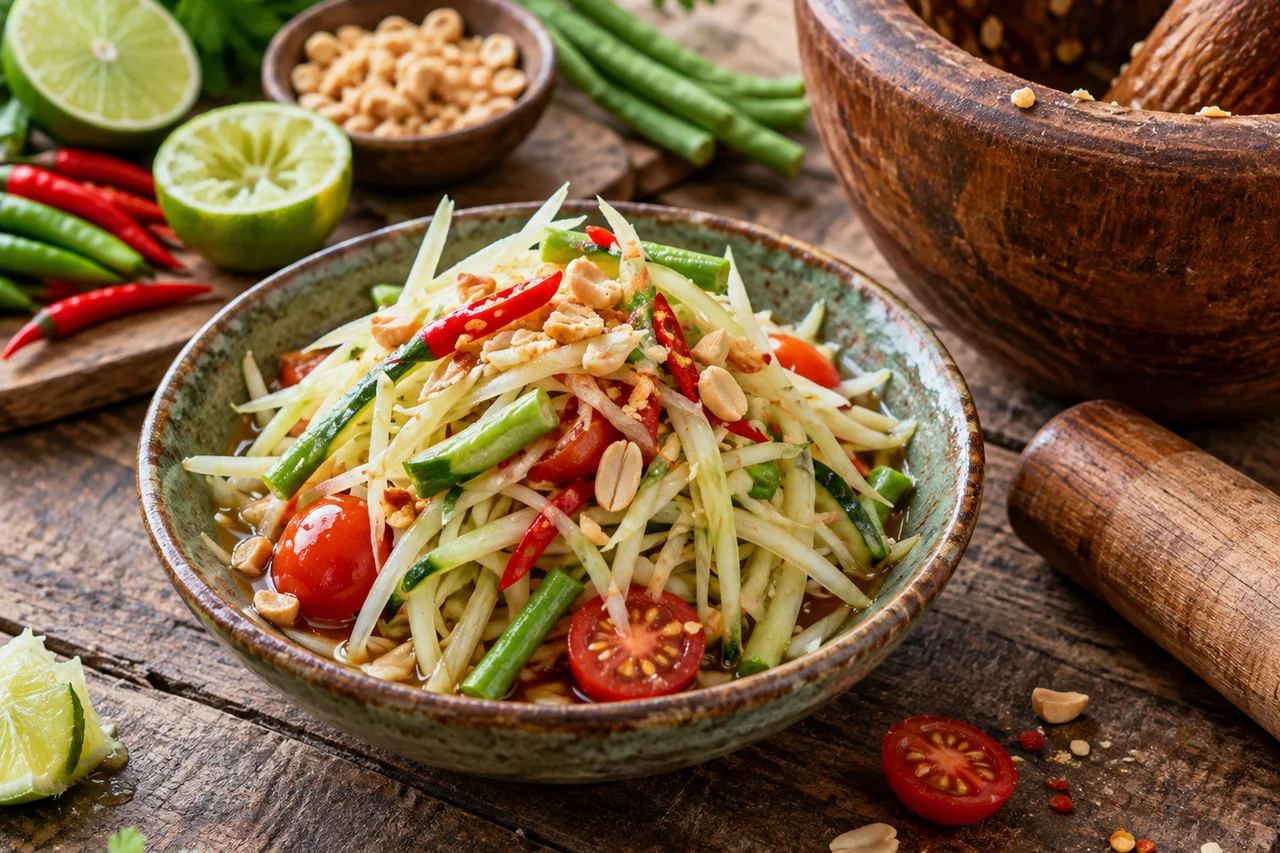
จำนวนที่สำหรับสูตรที่พิมพ์: 4
วัตถุดิบ
- 500 g แตงกวาส่วนที่กินได้หลังคว้านเมล็ด
- 150 g มะเขือเทศ
- 100 g ถั่วแขกต้มสุกสะเด็ดน้ำ
- 30 g ถั่วลิสงทั้งเมล็ดคั่วไม่ใส่เกลือ
- 3.5 g กระเทียมสดปอกเปลือก
- 5 g พริกสด
- 30 g น้ำมะนาว
- 15 g น้ำปลา ใช้ค่าประกอบอาหารทั่วไปจาก AFCD เป็นตัวแทน
- 4 g อิริทริทอล Foodin
- เกลือตามชอบ
วิธีทำ
- ชั่งวัตถุดิบส่วนที่กินได้ทั้งหมดตามรายการ ไม่เติมน้ำมันหรือเครื่องเคียงนอกสูตร
- คว้านเมล็ดแตงกวาออกแล้วชั่งส่วนที่กินได้ 500 g ชั่งถั่วแขกที่ต้มสุกและสะเด็ดน้ำแล้ว 100 g ไม่ใช้ถั่วแขกดิบ หั่นมะเขือเทศ
- ตำกระเทียมและพริก สับถั่วลิสงคั่วทั้งเมล็ดครึ่งหนึ่งให้หยาบ ไม่บดเป็นเนยหรือเนื้อเนียน ใส่น้ำมะนาว น้ำปลา และอิริทริทอล Foodin 4 g
- คลุกผักทั้งหมดกับน้ำปรุง ใส่ถั่วลิสงที่เหลือ กินน้ำปรุงทั้งหมดและแบ่งเป็น 4 ที่
โภชนาการต่อหนึ่งที่
คุณค่าทางโภชนาการเป็นค่าประมาณ ไม่ใช่ผลวิเคราะห์ในห้องปฏิบัติการ ผลลัพธ์ขึ้นอยู่กับผลิตภัณฑ์และขนาดเสิร์ฟ
- คาร์โบไฮเดรตสุทธิ
- 5.33 g
- คาร์โบไฮเดรตรวม (รวมใยอาหารและโพลิออล)
- 9.7 g
- โปรตีน
- 3.78 g
- ไขมัน
- 4.24 g
- ค่าประมาณจากแบบจำลอง ค่าประมาณ GL
- ประมาณ 2 / หนึ่งที่
GL ต่ำ
ความเชื่อมั่น · ต่ำ ค่าหรือสมมติฐานบางส่วนในการคำนวณยังมีความไม่แน่นอน
ค่าประมาณนี้ใช้ข้อมูลคาร์โบไฮเดรตและค่า GI ร่วมกับสมมติฐานของแบบจำลอง การคำนวณใช้ค่าเทียบเคียงจากอาหารที่คล้ายกันหรือจากกลุ่มอาหารด้วย
ที่มาของค่าประมาณและแหล่งข้อมูล ↗
คำนวณค่าประมาณอย่างไร
ค่า GL ต่อหนึ่งที่คำนวณจากข้อมูลวัตถุดิบ ระดับความเชื่อมั่นบอกคุณภาพของข้อมูลที่ใช้คำนวณ ระดับน้ำตาลในเลือดของแต่ละคนอาจตอบสนองต่างกัน
- ค่าที่ใช้ในแบบจำลอง
- ค่าเทียบเคียง
รวมคาร์โบไฮเดรตที่ใช้ได้ทั้งหมดโดยไม่ตัดส่วนเล็กน้อยออก เป็นค่าประมาณจากวัตถุดิบ ไม่ใช่ผลตอบสนองจากมื้ออาหารที่วัดจริง ยังไม่ทราบช่วงความไม่แน่นอนทางชีวภาพเป็นตัวเลข
แหล่งงานวิจัยและรายละเอียดทางเทคนิค
ชื่อแหล่งข้อมูลและหมายเหตุทางเทคนิคแสดงตามต้นฉบับ
แหล่งข้อมูลคาร์โบไฮเดรต
- KURKKU · THL Fineli Release20 CC BY4.0
- TOMAATTI · THL Fineli Release20 CC BY4.0
- Bean, green, fresh, boiled, drained · FSANZ AFCD Release3 CC BY-SA3.0 Australia
- Nut, peanut, without skin, roasted, with oil, unsalted · FSANZ AFCD Release3 CC BY-SA3.0 Australia
- Garlic, peeled, fresh, raw · FSANZ AFCD Release3 CC BY-SA3.0 Australia
- Chilli (chili), green, raw · FSANZ AFCD Release3 CC BY-SA3.0 Australia
- Juice, lime · FSANZ AFCD Release3 CC BY-SA3.0 Australia
- Sauce, fish, commercial · FSANZ AFCD Release3 CC BY-SA3.0 Australia
- Foodin Erytritoli, Luomu 200 g · Foodin product-label factual nutrient declaration; product reference only, not an open-database licence
แหล่งข้อมูลค่า GI และการคำนวณ
- Published assignment for low-carbohydrate vegetables, not measured food GI · GK80 PUBLISHED_IMPUTATION: Coding estimate only. Application to named fresh herbs, sprouts and alliums is an explicit project interpretation. It does not establish a physiological maximum or a one-unit uncertainty bound. Not a default for seed spices, flour, sauces or stock.. Recipe-specific applicability: Named weighed edible input; all listed portions consumed; raw-input nutrient retention proxy, not measured cooked-food retention. Explicit NONSTARCHY_VEGETABLE identity. Published GI coding plus project scope, not human-measured ingredient GI.; Named weighed edible input; all listed portions consumed; raw-input nutrient retention proxy, not measured cooked-food retention. Explicit NONSTARCHY_VEGETABLE identity. Published GI coding plus project scope, not human-measured ingredient GI.; Named weighed edible input; all listed portions consumed; raw-input nutrient retention proxy, not measured cooked-food retention. Explicit NONSTARCHY_VEGETABLE identity. Published GI coding plus project scope, not human-measured ingredient GI.; Named weighed edible input; all listed portions consumed; raw-input nutrient retention proxy, not measured cooked-food retention. Explicit NONSTARCHY_VEGETABLE identity. Published GI coding plus project scope, not human-measured ingredient GI.; Named weighed edible input; all listed portions consumed; raw-input nutrient retention proxy, not measured cooked-food retention. Explicit NONSTARCHY_VEGETABLE identity. Published GI coding plus project scope, not human-measured ingredient GI. (ต่ำ)CALCULATION_POLICY · PUBLISHED_IMPUTATION · PUBLISHED_IMPUTATION
- Whole peanuts, preparation unspecified; explicit analogy to roasted peanuts · GK80 HUMAN_GI: Small sample; preparation/roast unspecified; LOW applied whole-food analogy, not direct recipe GI. SEM6 is not a biological recipe range. No second glucose conversion.. Recipe-specific applicability: Named weighed edible input; all listed portions consumed; raw-input nutrient retention proxy, not measured cooked-food retention. Explicit WHOLE_PEANUT identity. Human food comparator used as LOW applied analogy; food/preparation limitations preserved. (ต่ำ)ANALOG · HUMAN_GI · FOOD_ANALOGUE
- Named foods with <=5 g available CHO/100 g · GK80 PUBLISHED_IMPUTATION: Published low-carbohydrate default50, applied only to reviewed named compositions <=5 g available CHO/100g. This cutoff is a project rule, not a validated scientific threshold. Explicit AFCD commercial soy sauce and AFCD tahini plus complete Maille Dijon label are allowed, not all brands or pastes. No flour/sugar/honey/syrup or composition-unknown food.. Recipe-specific applicability: Named weighed edible input; all listed portions consumed; raw-input nutrient retention proxy, not measured cooked-food retention. Explicit CITRUS_JUICE identity. Published GI coding plus project scope, not human-measured ingredient GI.; Named weighed edible input; all listed portions consumed; raw-input nutrient retention proxy, not measured cooked-food retention. Explicit FISH_SAUCE identity. Published GI coding plus project scope, not human-measured ingredient GI. (ต่ำ)CALCULATION_POLICY · PUBLISHED_IMPUTATION · PUBLISHED_IMPUTATION
ป้ายคีโตและคาร์โบไฮเดรตต่ำเป็นการจัดหมวดหมู่โดยผู้จัดทำ ยังไม่ได้ยืนยันด้วยการคำนวณโภชนาการครบทุกสูตร
หมายเหตุ
ค่า GL เป็นค่าประมาณจากผลรวมวัตถุดิบที่มีความเชื่อมั่นต่ำ ไม่ใช่ผลตอบสนองที่วัดจากอาหารมื้อนี้ รวมคาร์โบไฮเดรตที่ใช้ได้ทั้งหมด แต่ไม่ทราบช่วงความไม่แน่นอนทางชีวภาพ ภาพเป็นเพียงตัวอย่างการเสิร์ฟ เครื่องเคียงที่ไม่ได้ระบุไม่รวมในค่าทางโภชนาการและ GL
ใช้ถั่วลิสงคั่วทั้งเมล็ดสับหยาบ ไม่ใช้เนยถั่วหรือแป้งถั่วลิสง น้ำปลาใช้ค่าประกอบทั่วไปจาก AFCD ไม่ใช่ฉลากยี่ห้อที่ตรวจยืนยัน อิริทริทอลนับรวมในคาร์โบไฮเดรตทั้งหมดเพียงครั้งเดียวและไม่เพิ่มคาร์โบไฮเดรตสุทธิ